
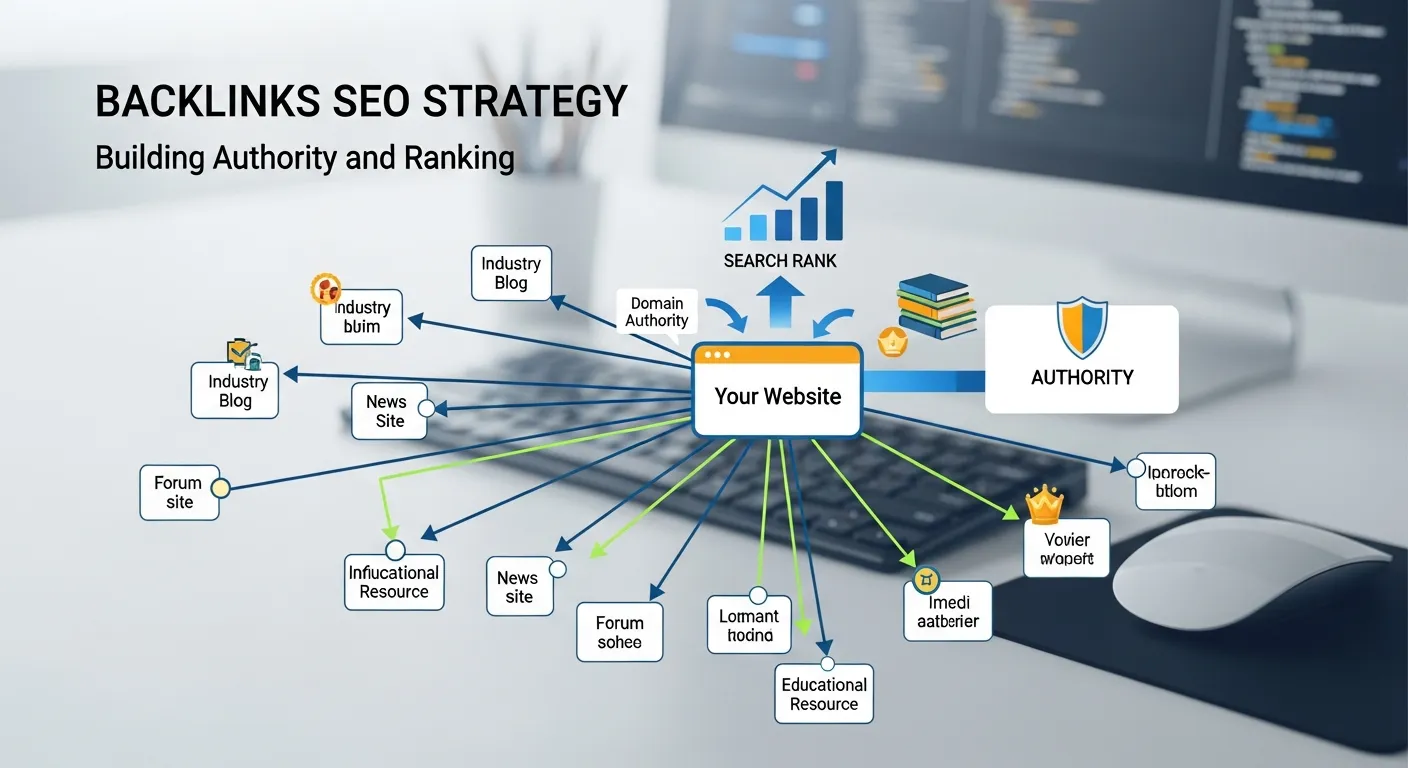
This comprehensive guide breaks down exactly how to create and execute a winning link-building plan. We cover the core elements of high-quality links, step-by-step outreach methods, essential tools, common pitfalls, and expert tactics. Read on to discover how you can transform your organic traffic through smart link acquisition.
Building a successful website requires more than just publishing great articles. You need search engines to trust your domain. A proven backlinks SEO strategy remains one of the most powerful ways to signal authority, improve your rankings, and outpace your competitors in search results.
The Foundation of a Backlinks SEO Strategy
When another website links to your domain, search engines treat that link like a vote of confidence. The more high-quality votes you accumulate, the more search engines trust your website. However, not all votes carry the same weight. Understanding the mechanics of these links is the first step in developing an effective backlinks SEO strategy.
To succeed, you must move beyond simply chasing a high volume of links. A modern approach prioritizes relevance, authority, and trust. If you run a finance blog, a link from a respected financial news outlet holds significantly more value than a link from a random travel diary. Search algorithms analyze the context of the linking page, the anchor text used, and the overall credibility of the linking domain.
You also need to align your link acquisition efforts with your broader content marketing plan. When your content naturally attracts attention, earning links becomes a frictionless process. Let us explore the specific characteristics that define a truly valuable link.
Characteristics of a High-Quality Backlink
Before launching outreach campaigns, you must know what makes a link valuable. Here are the primary factors to evaluate:
- Domain Authority and Rating: The linking website should have a solid reputation. Metrics like Domain Authority (DA) or Domain Rating (DR) help estimate this. A link from a high-DR site passes more value to your page.
- Topical Relevance: The content on the linking page must relate to your industry. Relevance often trumps pure authority.
- Dofollow vs. Nofollow: Dofollow links pass SEO value (link juice) to your site. Nofollow links include a tag telling search engines not to pass authority, though they still drive valuable referral traffic.
- Anchor Text: The clickable text of the link should provide context. While exact-match anchor text is useful, a natural mix of branded, descriptive, and partial-match phrases protects your site from algorithmic penalties.
- Placement Context: A link embedded naturally within the body of an article carries more weight than a link buried in a footer or sidebar.
Step-by-Step Guide to Executing a Backlinks SEO Strategy
Building a robust profile requires a systematic approach. Follow these steps to implement a backlinks SEO strategy that drives measurable results.
Step 1: Conduct a Competitive Link Audit
You cannot build a roadmap without knowing where you stand. Begin by analyzing your current link profile and comparing it against your top competitors. Use SEO software to identify who links to your competitors but not to you.
Look for patterns in their link acquisition. Are they getting most of their links through guest posting, digital PR, or resource pages? Understanding their tactics allows you to replicate their successes and identify gaps where you can outperform them. This analysis also helps you set realistic targets for your own campaigns. Be sure to integrate these findings into your routine technical SEO audit to ensure your site is healthy enough to maximize the value of new links.
Step 2: Create Link-Worthy Assets
Outreach fails if you do not have something valuable to link to. People link to content that makes them look good or helps their audience. You need to invest in creating linkable assets.
Examples of highly linkable content include:
- Original Research and Data: Surveys, industry reports, and proprietary data naturally attract links from writers looking to back up their claims.
- Comprehensive Guides: Long-form, definitive guides that cover a topic exhaustively become reference points for other creators.
- Interactive Tools: Calculators, templates, and quizzes offer utility, making them highly shareable.
- Infographics: Visual data representations remain effective because they simplify complex information and are easily embeddable.
Step 3: Launch Targeted Outreach Campaigns
Once you have linkable assets, you must actively promote them. Email outreach is the engine of a proactive backlinks SEO strategy.
Start by finding articles that discuss your topic. Reach out to the authors and suggest your resource as a valuable addition to their piece. Keep your emails concise, personalized, and focused on the value you offer them.
- Personalize the Subject Line: Make it clear why you are emailing.
- Demonstrate Familiarity: Mention a specific detail from their article to prove you actually read it.
- Pitch the Value: Explain exactly how your link improves their content or helps their readers.
Step 4: Leverage Broken Link Building
The broken link building tactic involves finding dead links on other websites and suggesting your working, relevant content as a replacement. This approach works well because you are doing the website owner a favor by helping them fix an error on their site.
You can use browser extensions or SEO software to scan resource pages in your niche for broken outbound links. When you find one, reach out to the webmaster, point out the broken link, and gently offer your link as a substitute.
Step 5: Maximize Guest Posting Opportunities
Guest posting remains a foundational element of any backlinks SEO strategy. By writing high-quality articles for other websites in your industry, you gain exposure to a new audience while securing a valuable link back to your domain.
Focus on contributing to reputable, authoritative sites rather than low-quality blogs that exist solely for link farming. Pitch unique, well-researched ideas that serve the target website’s audience. Within the article, include a natural, contextual link back to an informational page on your site. Avoid forcing links to commercial landing pages, as editors often reject these.
Top Link Building Tools Comparison
Executing a complex backlinks SEO strategy requires the right software. Here is a comparison of top tools to help you streamline your efforts.
|
Tool Name |
Primary Use Case |
Key Features |
Best For |
|---|---|---|---|
|
Ahrefs |
Backlink analysis and competitor research |
Massive link index, broken link checker, content explorer |
Advanced SEO professionals and agencies |
|
Moz Pro |
Link profiling and authority tracking |
Link Explorer, Spam Score metric, Domain Authority |
Beginners and intermediate marketers |
|
BuzzStream |
Outreach and relationship management |
Email templates, automated follow-ups, contact finding |
Dedicated outreach teams |
|
Hunter.io |
Finding email addresses |
Domain search, email verification, bulk tasks |
Cold email outreach campaigns |
|
Semrush |
All-in-one SEO and link auditing |
Backlink Audit tool, link building workflow, gap analysis |
Comprehensive SEO management |
Note: You can learn more about search guidelines and best practices directly from Google Search Central to ensure your tool usage complies with webmaster guidelines.
Common Mistakes to Avoid
Even experienced marketers make errors that can derail their backlinks SEO strategy. Avoid these common pitfalls to protect your site’s reputation and rankings.
Buying Cheap Link Packages
Purchasing hundreds of links from low-quality sites or private blog networks (PBNs) is a fast track to a search engine penalty. Algorithms are highly sophisticated and easily detect unnatural linking patterns. Focus on earning links organically rather than paying for shortcuts.
Ignoring Anchor Text Diversity
Using the exact same focus keyword as your anchor text for every link looks manipulative. A healthy link profile features a natural mix of anchor text types. Use your brand name, URL variations, descriptive phrases, and occasional exact-match keywords to maintain a balanced profile.
Neglecting Internal Linking
While external links are crucial, many site owners forget to optimize their internal structure. Proper internal linking helps distribute the authority gained from external links throughout your entire website. Ensure you regularly update your on-page SEO techniques to interlink your important pages with descriptive anchor text.
Focusing Only on High-Volume Keywords
When building links to your assets, do not solely target pages optimized for massive, highly competitive keywords. Building links to pages targeting long-tail, high-intent keywords often yields better conversion rates and faster ranking improvements.
Expert Tips and Pro Strategies
To elevate your backlinks SEO strategy from good to exceptional, incorporate these advanced tactics into your workflow.
- Reclaim Unlinked Brand Mentions: Set up alerts for your brand name. When a website mentions your company but fails to include a link, reach out and politely ask them to turn the mention into a clickable link. This is often the easiest link you will ever earn.
- Leverage Digital PR: Create data-driven stories or controversial industry opinions and pitch them to journalists at major publications. A single link from a top-tier news site can dramatically increase your domain authority. Sites like Help a Reporter Out (HARO) or Connectively are great places to start answering journalist queries.
- Build Relationships, Not Just Links: Stop viewing outreach as a transactional exchange. Engage with content creators on social media, share their work, and offer genuine value before ever asking for a link. Long-term relationships yield recurring link opportunities.
- Update and Relaunch Old Content: If you have an older piece of content that naturally earned links in the past, update it with new data and relaunch it. You can then reach out to everyone who linked to the old version and let them know about the fresh, updated resource.
- Utilize Podcast Guesting: Pitch yourself as a guest on industry podcasts. Podcast hosts almost always include a link to their guest’s website in the show notes. This builds your personal brand while simultaneously acquiring high-authority links.
Integrating Backlinks with Overall SEO
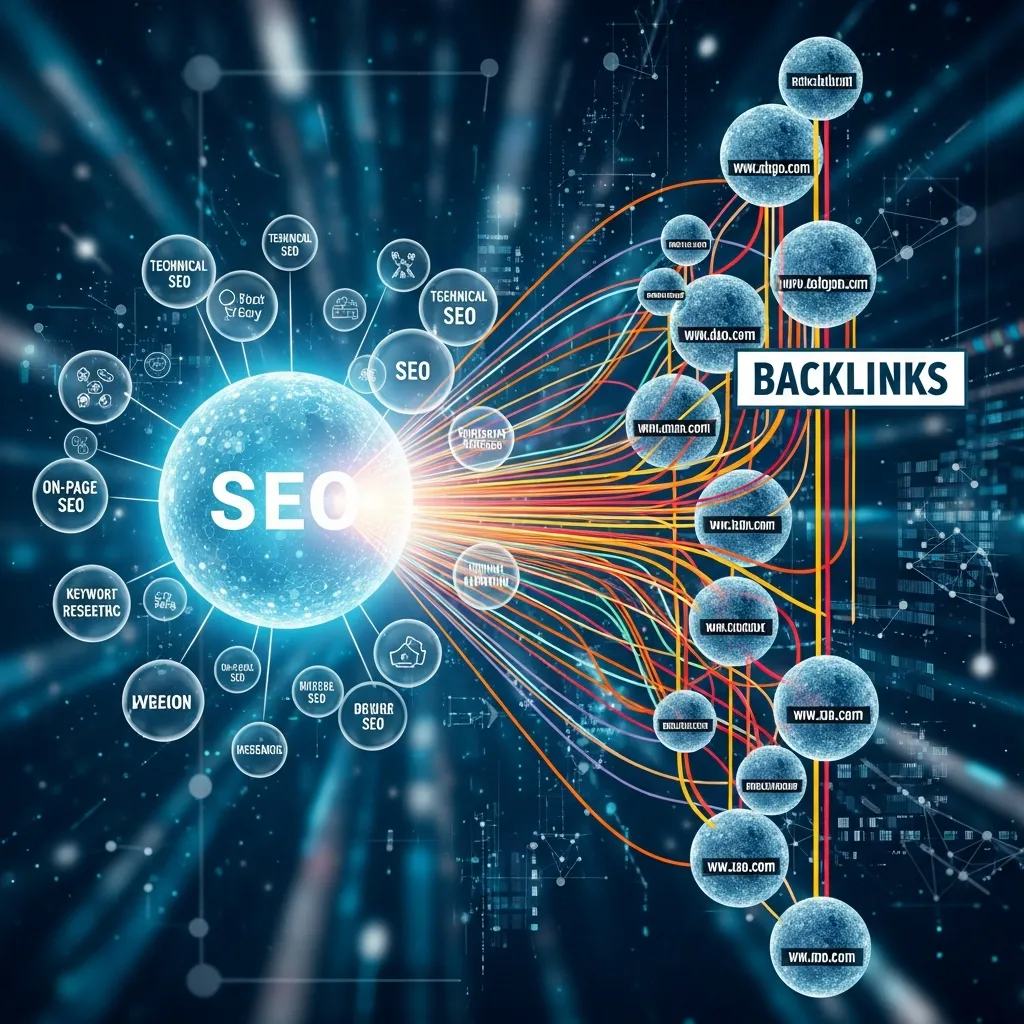
A backlinks SEO strategy does not operate in a vacuum. It must work in tandem with your technical SEO and content creation efforts. If your website is slow, difficult to navigate on mobile, or features thin content, no amount of link building will save it.
Before heavily investing in a backlinks SEO strategy, ensure your technical foundation is solid. Fix crawl errors, optimize your site speed, and ensure your site architecture makes sense. When your site is technically sound and your content is genuinely helpful, every backlink you earn becomes significantly more effective.
Remember that search engine optimization is a long-term game. Earning high-quality links takes time, patience, and persistence. Do not get discouraged if your initial outreach emails go unanswered. Refine your pitch, improve your linkable assets, and keep pushing forward.
Developing and executing a powerful backlinks SEO strategy is fundamental to achieving sustained organic growth. By prioritizing quality over quantity, creating exceptional content, and building genuine relationships within your industry, you can secure the authority signals search engines demand. Start auditing your current link profile today, identify your best linkable assets, and launch your first targeted outreach campaign to begin climbing the search engine rankings.
FAQs
1. What is a backlinks SEO strategy?
A backlinks SEO strategy is a deliberate, planned approach to acquiring hyperlinks from other websites to your own. The goal is to improve your website’s domain authority, signal trustworthiness to search engines, and ultimately achieve higher rankings for your target keywords.
2. How many backlinks do I need to rank on the first page?
There is no specific number of links required to rank. The required amount depends entirely on the competitiveness of your niche and the specific keyword. Focus on the quality and relevance of the links rather than chasing an arbitrary number. A few high-authority links often outperform dozens of low-quality ones.
3. Are nofollow links completely useless for SEO?
No, nofollow links are not useless. While they do not pass direct ranking authority (link juice) in the same way dofollow links do, they still generate referral traffic, increase brand awareness, and help create a natural-looking, diverse link profile, which search engines favor.
4. What is the difference between Domain Authority (DA) and Domain Rating (DR)?
Domain Authority is a metric created by Moz, while Domain Rating is a metric created by Ahrefs. Both attempt to quantify the overall strength and authority of a website’s backlink profile on a scale of 1 to 100. They are third-party estimations, not official Google metrics.
5. Is guest posting still an effective link building tactic?
Yes, guest posting remains highly effective when done correctly. The key is to write high-quality, original content for reputable websites within your specific industry. Avoid mass-submitting low-quality articles to irrelevant sites solely for the purpose of getting a link.
6. How do I find broken link building opportunities?
You can find broken link opportunities by using SEO tools like Ahrefs or Semrush, or by using free Chrome extensions like Check My Links. Navigate to resource pages or popular articles in your niche and run the tool to highlight any dead outbound links that you could potentially replace with your own content.
7. Why is my backlinks SEO strategy not improving my rankings?
If your links are not moving the needle, it could be due to several factors. The links might be from low-quality or irrelevant sites, your on-page SEO might be lacking, your site could have technical issues preventing indexing, or your competitors might simply have much stronger link profiles.
8. Can I just buy backlinks to save time?
Buying links is explicitly against search engine webmaster guidelines. If algorithms detect unnatural link buying patterns, your site can be heavily penalized or completely de-indexed. It is a high-risk tactic that is not recommended for long-term, sustainable business growth.
9. What is anchor text and why does it matter?
Anchor text is the visible, clickable text in a hyperlink. It matters because it provides context to search engines about the content of the page being linked to. Over-optimizing anchor text with exact keywords can trigger spam filters, so variation is crucial.
10. How long does it take to see results from building backlinks?
SEO is a gradual process. It typically takes anywhere from a few weeks to several months for search engines to crawl new links, evaluate their value, and adjust your rankings accordingly. Consistency and patience are vital components of any successful campaign.